
Seeing trees every day: why visibility matters for wellbeing
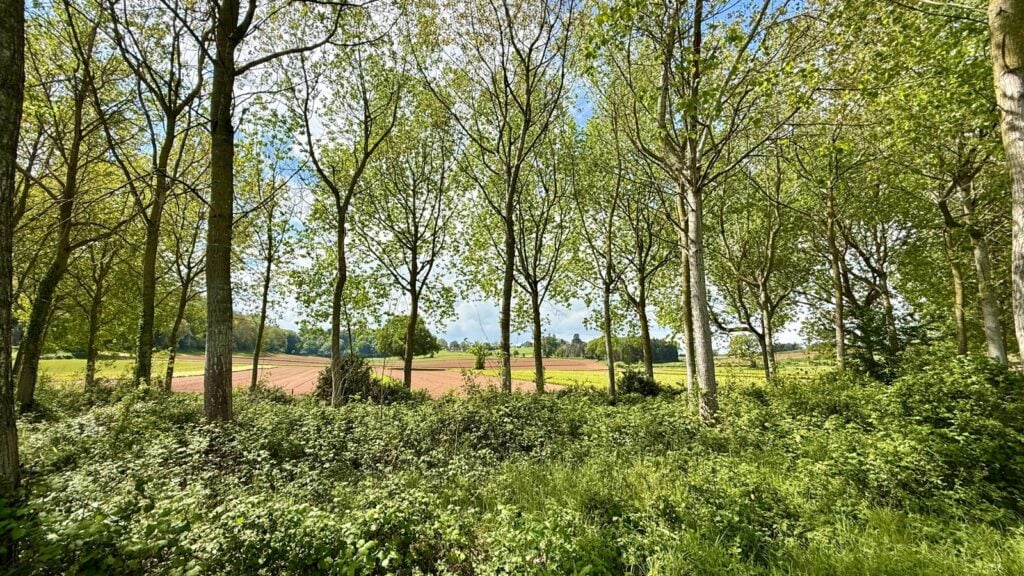
How many trees can you see right now?
Whether you’re working at your desk, standing at the kitchen sink or sitting in a meeting room, take a moment to look out the window. What do you see?
For many people, the view is dominated by buildings, roads and hard surfaces. Yet research increasingly shows that something as simple as seeing trees every day can have a meaningful impact on our wellbeing.
This idea forms part of the widely discussed 3-30-300 Rule, which suggests that everyone should be able to see at least three trees from where they live, work or study. While it sounds straightforward, the principle is backed by a growing body of evidence linking visible greenery to improved mental health and quality of life.
Why seeing trees matters
The benefits of nature are often associated with spending time outdoors, but studies suggest that simply viewing trees and green spaces can also support wellbeing.
Research has found that looking at natural environments can help reduce stress and promote more relaxed physiological responses compared to built-up surroundings. Even passive exposure to greenery through a window has been associated with improved mood and reduced mental fatigue.
This is important because not everyone can regularly access parks, woodlands or green spaces. Visible trees bring nature into people’s daily lives, creating frequent opportunities for connection without requiring extra time or travel.
The effect on mood, stress & concentration
Visible greenery does more than brighten a view. Studies examining urban nature and health have consistently linked tree presence with lower stress levels, improved mental wellbeing and better attention restoration.
More recent research has also highlighted connections between exposure to urban greenery and reduced levels of anxiety and depression. In workplaces, views of trees and natural landscapes have been associated with improved concentration, stronger working memory and better cognitive performance.
In practical terms, people who can see greenery throughout the day often report feeling less mentally drained and better able to focus on tasks.
Why three trees?
The ‘three visible trees’ element of the 3-30-300 Rule ‘isn’t an arbitrary target.
Research examining tree visibility from windows found that people who could see at least three trees reported higher levels of wellbeing and a stronger connection to nature than those whose views contained fewer or no trees.
What makes this benchmark particularly powerful is its simplicity. Large-scale canopy-cover targets can feel remote or difficult to understand, whereas counting visible trees is something anyone can do immediately. It transforms urban greening from an abstract policy objective into a measurable everyday experience.
More than a view
The evidence is becoming increasingly clear: visible trees can support mental wellbeing, improve concentration and help people feel more connected to nature.
In the second part of this series, we’ll look at how planners, developers and landscape professionals can turn this knowledge into action through thoughtful design, tree selection and long-term management.
After all, if seeing trees benefits people, shouldn’t visibility be planned from the very beginning?
Sources
• Jo et al. (2019), Physiological Benefits of Viewing Nature, Int. J. Environ. Res. Public Health
• Browning et al. (2024), Nature connectedness and visibility of trees through windows, Int. J. Environ. Health Research
• Wolf et al. (2020), Urban Trees and Human Health: A Scoping Review, IJERPH
• Li et al. (2025), Acute mental health benefits of urban nature, Nature Cities
• Ordóñez Barona et al. (2023), Tree visibility and satisfaction with urban trees