
Designing for visibility – making trees part of everyday life
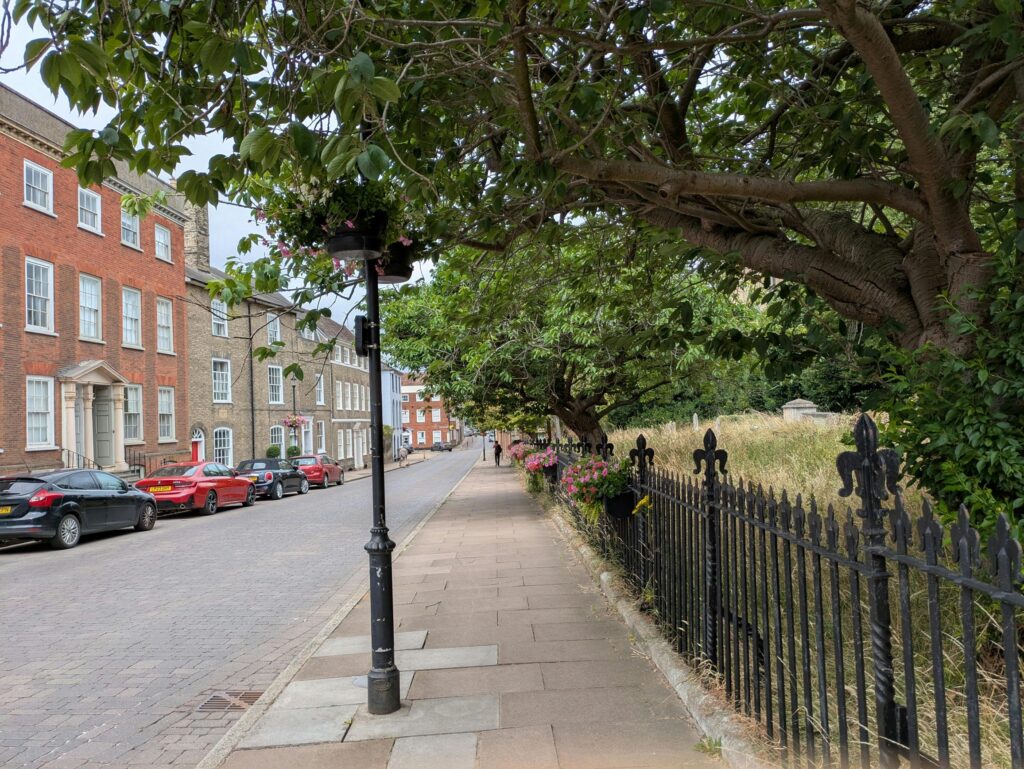
In the first blog of this series, which we published last month, we explored how seeing trees every day can improve wellbeing, reduce stress and support concentration. But if tree visibility is so important, how do we ensure people actually benefit from it?
The answer lies in design.
Everyday views matter
Research shows that the benefits of trees are strongest when they form part of everyday routines rather than occasional experiences.
While parks and green spaces remain vital, what people see from their homes, workplaces, schools and healthcare facilities can have a lasting influence on wellbeing. The common theme across many studies is simple: regular exposure matters.
This means visibility should be considered alongside traditional planting objectives such as biodiversity, shade, carbon capture and aesthetics.
Designing with visibility in mind
Visible trees rarely happen by accident.
The placement of buildings, orientation of windows, site layout and landscape design all influence whether trees become part of daily life or disappear into the background. A development may include substantial planting, but if residents cannot easily see those trees from key indoor spaces, many of the wellbeing benefits can be diminished.
Considering visibility at the earliest planning stages allows designers to position trees where they will have the greatest positive impact. Key viewpoints, sightlines and frequently occupied spaces should all be part of the conversation.
The importance of the right trees
Species selection is equally important.
Trees need to provide both immediate and long-term benefits, while being suited to local conditions and future climate challenges. Considering mature size, canopy shape and resilience helps ensure planting schemes continue to deliver benefits for decades to come.
Appropriate sourcing and specification also play a crucial role. Trees that establish successfully are far more likely to provide the visual and environmental benefits communities depend upon.
From amenity to essential infrastructure
Historically, trees have sometimes been viewed as a desirable addition once developments are largely complete. Increasingly, however, they are being recognised as essential infrastructure.
Visible trees contribute to healthier, more attractive and more liveable places. They help create a sense of place, support mental wellbeing and improve how people experience the environments around them.
For developers, local authorities and landscape professionals, this represents an opportunity to deliver value that extends well beyond traditional planting objectives.
A simple question with a powerful impact
The conversation around visible trees can begin with one simple question:
What will people see every day?
The 3-30-300 Rule’s ‘three visible trees’ principle offers a practical reminder that successful planting isn’t only about how many trees are planted. It’s also about where they are planted and whether people can benefit from seeing them.
Because when trees are visible, their benefits become part of everyday life – by design.
Sources
• Jo et al. (2019), Physiological Benefits of Viewing Nature, Int. J. Environ. Res. Public Health
• Browning et al. (2024), Nature connectedness and visibility of trees through windows, Int. J. Environ. Health Research
• Wolf et al. (2020), Urban Trees and Human Health: A Scoping Review, IJERPH
• Li et al. (2025), Acute mental health benefits of urban nature, Nature Cities
• Ordóñez Barona et al. (2023), Tree visibility and satisfaction with urban trees